
Human Impact in Education

The state of the adult shapes the world a child learns inside.

Education is shaped by more than curriculum. Children learn inside the tone, pace, expectations, reactions, relationships and emotional climate they experience every day.

Stress, emotional load and pressure can influence how adults interpret behaviour, communicate, hold boundaries and respond in difficult moments.

Human Impact in Education supports schools, educators and learning communities with practical professional learning in teacher wellbeing, self-awareness, emotional regulation, communication and understanding the human being beneath behaviour.

This work helps adults understand their own state, so they can meet pressure, behaviour and relationships with greater capacity, clarity and care.

The educational impact

Children don't only learn from what adults teach. They learn inside the state adults bring into a room.

Every educator knows the feeling of a room changing.

A class can become loud before anyone knows why. A child can shut down before they have words for what happened. A staffroom can carry exhaustion for so long that it starts to feel normal. A teacher can arrive with the best intentions and still have less patience, flexibility or emotional range than the moment requires.

Human Impact in Education begins with the adults who shape the environment. Not because educators are responsible for every child outcome, but because the way adults respond under pressure helps shape what children come to expect from authority, conflict, repair, safety, belonging and themselves.

When educators are supported to understand stress, regulate their own state, communicate with greater awareness and repair relational ruptures, the benefit doesn't stay with the educator. It ripples into the classroom, staff culture, the child's learning experience and the wider school community.

The science

Pressure changes more than how we feel.

Stress is physiological as well as psychological. Under pressure, changes in our emotional, autonomic and cognitive systems can influence attention, interpretation, impulse control, communication and behavioural flexibility.

State

Physiological and emotional state influences what an educator can access in the moment. Under sustained pressure, patience, attention, cognitive flexibility and emotional range can all be affected.

STATE SETS THE TONE

Your state does not stay with you. It enters the room before your words do.

Heart + mind

Professional knowledge still has to be accessed under pressure.

Educators can know the strategy and still have moments where stress narrows access to patience, flexibility and deliberate thought.

Heart & Mind-Led Leadership brings physiology, emotion and cognition back into the same conversation.

State + awareness

Heart

  • Physiology
  • Emotion
  • Body signals
  • Relational awareness
  • Values and care

The bridge between them

Coherence

  • The capacity to remain sufficiently organised internally that emotion, physiology and cognition can work together rather than pressure automatically determining the response.

Thinking + interpretation

Mind

  • Attention
  • Perception
  • Critical thinking
  • Working memory
  • Judgement
  • Planning

Coherence is about preserving capacity.

In a demanding classroom, educators don't need to be calm all the time. They need enough regulation to remain present, think clearly and respond deliberately when pressure rises.

The Human Impact approach

Better systems matter. So does the capacity of the people inside them.

Teacher wellbeing cannot be reduced to individual resilience.

Workload, staffing, leadership, resources, policy, behaviour systems and organisational conditions all matter. Human Impact doesn't transfer those responsibilities onto educators. We add the other side of the equation: helping adults build the self-awareness, regulation, communication and personal leadership they can draw on within the realities of the system they're working in.

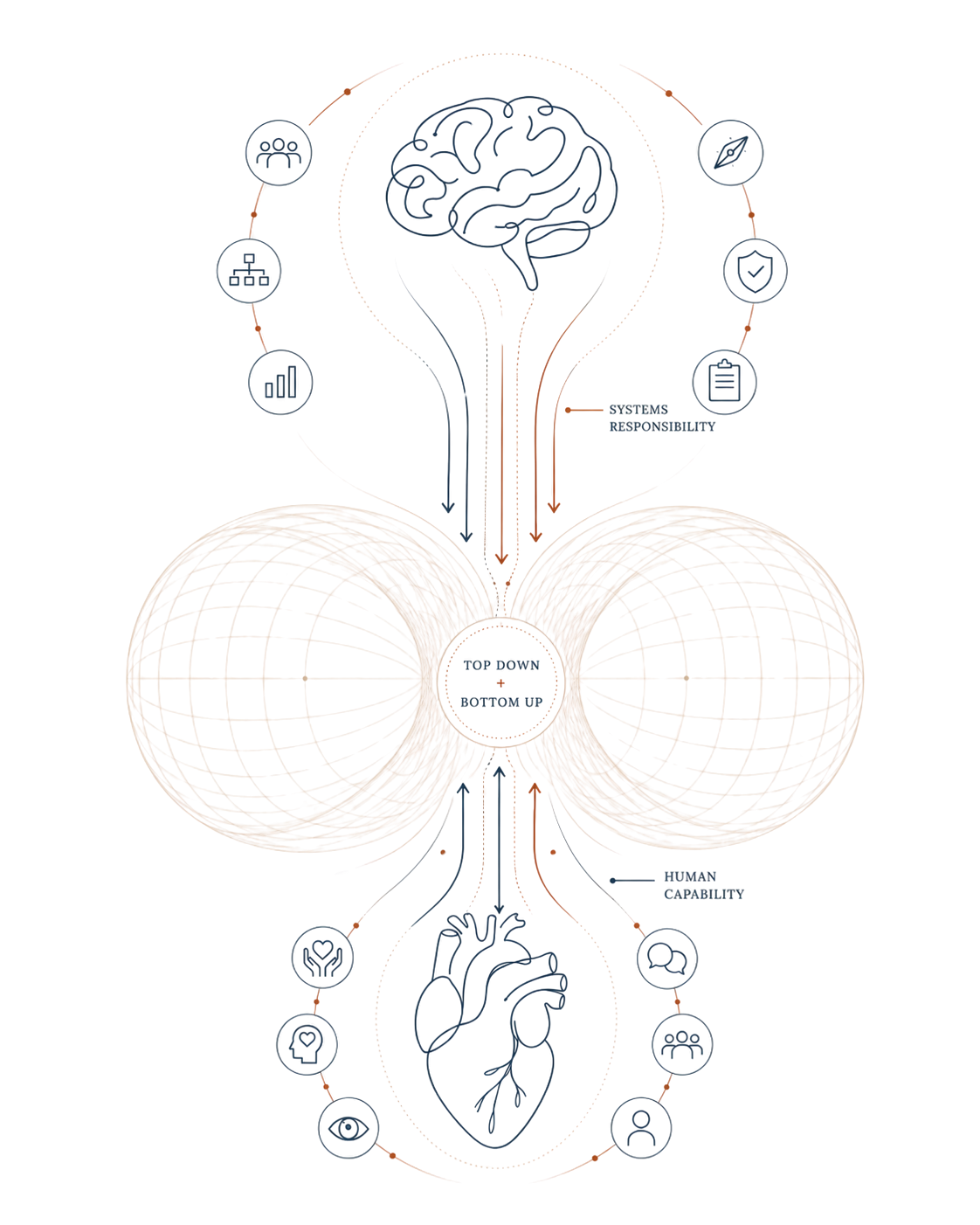
The Human Impact model

Systems responsibility

Schools and systems create the conditions through leadership, work design, resourcing, policy, behaviour frameworks and staff support.

They meet in the middle

Human capability

Educators build self-awareness, emotional regulation, communication, relational capability and response-ability.

That is the Human Impact approach.

Diagram showing systems responsibility flowing down from the mind and human capability rising up from the heart, meeting in the middle as top down plus bottom up

What we build

The capabilities educators carry into the moments that matter.

Human Impact develops practical capabilities that support how educators recognise their state, interpret behaviour, communicate under pressure, repair relationships and hold boundaries with greater awareness.

State Awareness & Body Literacy

Recognise the signs of stress, emotional load and activation before they begin driving communication or behaviour.

SHARED IMPACT

Culture is not built by one person alone.

Our work

One body of work. Different ways to bring it into your learning community.

Human Impact can begin with a keynote, deepen through facilitated workshops or be combined into a professional learning experience shaped around your school, staff or education event.

Keynote

Heart & Mind-Led Leadership in Learning

Building the human capacity that shapes wellbeing, behaviour and learning.

A keynote exploring how the state adults bring into a room influences communication, relationships and culture. Through personal leadership and the RELATE framework, educators learn to recognise reactive patterns, communicate with greater intention and strengthen connection across classrooms, staffrooms and school communities.

Enquire About This Keynote

Workshop

Biology of Belief

The hidden biology behind behaviour, health and human impact.

An interactive exploration of how stress, beliefs, internal narratives and learned patterns can influence physiology, perception and behaviour. Participants develop greater awareness of what may be shaping their own responses and the environments they help create.

Enquire About This Workshop

Workshop

Leading with Self-Awareness

Leadership that's sustainable, not self-sacrificing.

A practical workshop exploring the patterns beneath over-responsibility, perfectionism, people-pleasing and emotional load. Designed to strengthen self-awareness, boundaries and sustainable personal leadership without asking educators to simply carry more.

Enquire About This Workshop

Teacher development days

Build the day around what your educators are actually carrying.

Teachers don't need another wellbeing session that tells them to care more. Most already care deeply. They need professional learning that respects the complexity of the work: language for what stress is doing, practical tools they can use under pressure, and space to understand how state influences communication, behaviour and their own capacity to recover.

Human Impact sessions can be delivered as a standalone keynote or workshop, or combined into a tailored teacher development experience around the needs of your staff and school community.

Ways to bring the work in

  • 01

    Keynote

    A high-impact shared learning experience that creates common language and shifts perspective across the room.

  • 02

    Workshop

    A deeper facilitated session with practical reflection, discussion and tools educators can apply to their own context.

  • 03

    Keynote + Workshop

    Begin with a shared whole-group experience, then deepen the learning through facilitated application.

RESPONSE-ABILITY

Your ability to respond in each moment is where your power lies.

Mental Health First Aid training

Building confidence to recognise when someone may need support.

Mental Health First Aid is practical, skills-based training that gives teachers and school leaders greater confidence to recognise and respond when a colleague or another adult may be experiencing a mental health problem or mental health crisis.

And it's important to remember that support in schools isn't only about students. Educators are managing classroom dynamics, student relationships, colleagues and parents alongside workload and time pressure — demands that can take a significant toll on their own mental health and wellbeing.

MHFA training strengthens mental health literacy across the adults within a school community, helping staff feel more confident starting conversations and responding when someone may need help.

1 in 5

Australians will experience mental health problems in any given year.

Mental illness

Now affects every Australian, either directly or indirectly.

75 per cent

Of all mental health problems emerge before the age of 24.

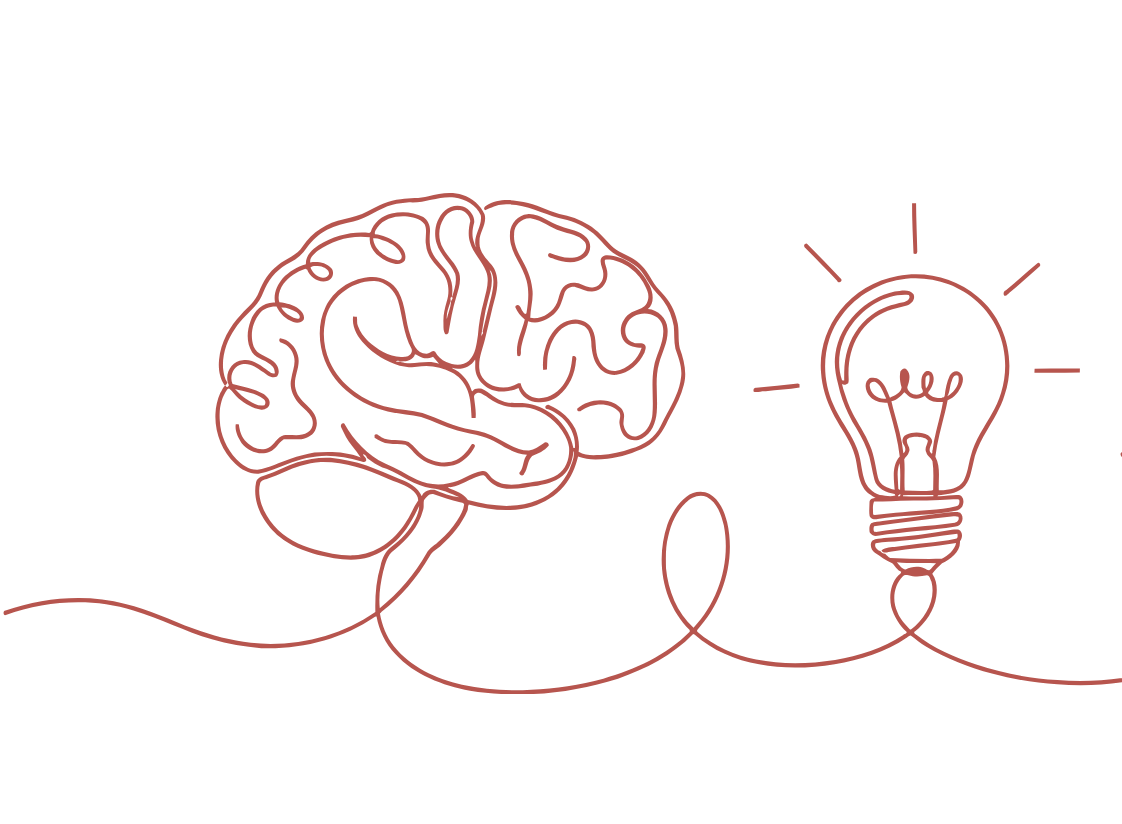
Line drawing of a brain connected to a lightbulb — research into learning

Education research

Research that helps us understand the human conditions for learning.

The Human Impact Research Library brings together research across educator wellbeing, stress physiology, self-regulation, teacher-child relationships, emotional regulation, classroom climate, leadership, behaviour and professional learning. We translate the evidence into accessible language while remaining clear about what is established, what is emerging and what the research cannot yet tell us.

Bring Human Impact into your school or education event.

Whether you're planning a teacher development day, staff wellbeing session, leadership workshop, education conference or tailored professional learning experience, we'll start with your context and help determine the right entry point.